
Greek Island Ferries: A Practical Guide
Greece has thousands of islands, and ferries are how most of them stay connected. With a little planning, island hopping is easy and rewarding. This guide explains how the system works. Start with the Greece country guide for top places and routes.
Ferry ports near Athens
- Piraeus – the largest port, serving the Cyclades, Crete, the Dodecanese, the Saronic islands and the North-east Aegean. It is huge, with many gates; check your departure gate in advance and allow time to walk or take the port shuttle. Metro Line 1 and the suburban railway reach the port.
- Rafina – east of Athens and closer to the airport, with fast services to the northern Cyclades such as Andros, Tinos and Mykonos.
- Lavrio – in the south-east of Attica, for Kea, Kythnos and some Cyclades routes.
Conventional vs high-speed ferries
- Conventional ferries are large ships that carry cars and passengers. They are slower but more stable in rough seas and have outdoor decks, cafés and lounges. Fares are generally lower.
- High-speed ferries and catamarans are much faster but cost more, have less deck space and can feel rough in strong wind.
Travel times vary greatly. For example, Piraeus to Santorini can take anywhere from around five hours on a fast boat to eight or more on a conventional ferry, depending on stops.
The island groups
- Cyclades – Mykonos, Santorini, Paros, Naxos, Milos and others. The most popular for island hopping.
- Dodecanese – Rhodes, Kos, Patmos and more, closer to Turkey.
- Crete – Greece's largest island, with overnight ferries from Piraeus to Heraklion and Chania.
- Ionian Islands – Corfu, Kefalonia, Zakynthos, reached from western mainland ports such as Igoumenitsa and Kyllini.
- Saronic Islands – Aegina, Poros, Hydra, close to Athens and good for short trips.
Booking tickets
Tickets can be bought from ferry companies, agencies in ports and towns, and partner sites such as Direct Ferries. In July and August, popular routes and car spaces fill up, so book ahead. Outside summer, schedules are much reduced, so check that your chosen route runs on your date.
Weather and the meltemi
In summer, a strong northerly wind called the meltemi often blows across the Aegean, especially in July and August. It can cause high-speed boats to be delayed or cancelled, and makes crossings rougher. Tips:
- Leave a buffer day before international flights.
- Prefer conventional ferries if you get seasick.
- Sit low and in the middle of the boat.
Planning a route
Island hopping works best along ferry lines rather than criss-crossing. A classic Cyclades route:
- Athens (Piraeus) → Paros
- Paros → Naxos
- Naxos → Santorini
- Santorini → Crete (Heraklion), then fly home from Crete.
Plan each leg on Tokyo2Us – for example Athens to Heraklion.
About prices
Ferry fares vary by company, ship type, class and season. We do not quote fixed fares. Tokyo2Us shows a labelled estimate where no live fare is available, with links to partners for real prices.
Sample routes for first-timers
For a first trip of 10 to 14 days, a few combinations work well:
- Classic Cyclades: Piraeus or Rafina to Mykonos, then Naxos, then Santorini, and fly back to Athens from Santorini.
- Quieter Cyclades: Piraeus to Paros, then Naxos, with a day trip to the Small Cyclades or Koufonisia, and back via Paros or Naxos.
- Crete and Santorini: fly to Heraklion, explore Crete, take a fast ferry to Santorini, and fly out from there.
- Saronic islands: Piraeus to Aegina, Poros and Hydra, which are short hops that suit a short trip or a family holiday.
Starting at one end and finishing at the other, with a flight in or out, avoids repeating the same crossing. Check first that the ferry connections you need run on the days you want, because some links only run on certain days of the week.
Travelling with a car
Most conventional ferries take cars and campervans, and many high-speed ferries do too. Taking a car is more expensive than travelling as a foot passenger. Spaces fill up in high season, so book vehicle places early. Rental companies sometimes restrict taking cars on ferries, so check your rental agreement first. On small islands it is usually easier to rent a car, scooter or quad bike locally for a day or two.
On board
Large ferries have indoor lounges, cafés, deck areas and reserved seats or cabins. On overnight routes, a cabin is worth considering. High-speed catamarans usually keep passengers inside during the trip, and the ride can be bumpy in strong winds. If you get seasick, choose a large conventional ferry and a seat in the middle of the ship.
Arriving early and boarding
Boarding can be busy, with cars, trucks and foot passengers loading through the same ramp. Arrive at the port well before departure, at least 30 to 60 minutes for foot passengers and more with a vehicle. Have your ticket ready on your phone or printed. Ferries can also run late, so leave a buffer before onward flights.
Booking and timetables
Ferry timetables for the summer season are usually published in spring, although they can change at short notice. Book well ahead for July and August, especially for cabins, cars and popular high-speed crossings. Outside the peak season, many routes run less often, and some do not run at all in winter, so check the schedules before planning a trip between islands.
Island hopping in the shoulder season
May, June, September and early October are excellent times to island hop. The sea is often warm enough for swimming, prices are lower and ferries are less crowded than in midsummer. Some small-island services start later in spring and stop earlier in autumn, so plan with care.
Our tip
Keep your plan flexible. Build in a spare day near the end of your trip, so a cancelled ferry does not cost you a flight home.

Photo credits
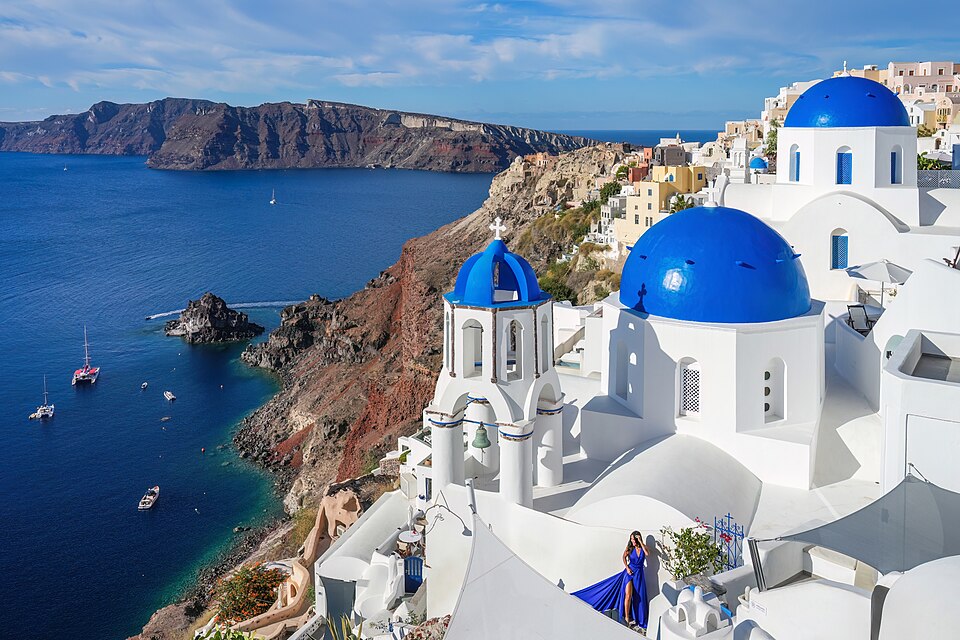
Photo: Neda Glisovic, CC BY-SA 4.0
FAQ
- Which port in Athens do ferries to Santorini leave from?
- Most leave from Piraeus, with some services from Rafina. Check your ticket.
- Do I need to book Greek ferries in advance?
- In July and August, booking ahead is wise, especially for cars and popular routes. Outside summer you can often buy closer to departure, but schedules are reduced.
- What is the meltemi?
- A strong seasonal northerly wind in the Aegean, mainly in summer, which can cause delays and rough crossings.
Partner links may earn us a commission at no extra cost to you. Learn more
Related guides
 FerriesBali Island Hopping by Ferry: Nusa Penida, the Gilis and LombokHow to travel from Bali to Nusa Penida, Nusa Lembongan, the Gili Islands and Lombok by public ferry or fast boat, with safety tip…
 PlanningHow Tokyo2Us Estimates Travel Times and PricesWhere Tokyo2Us data comes from, how estimates are calculated and labelled, what cached fares mean, and how we make money through …
 RoutesDubai to Abu Dhabi: Bus, Taxi, Car or TrainHow to get from Dubai to Abu Dhabi by intercity bus, taxi, rental car or rail, with practical tips on payment cards, timing and t…